Silo Systems
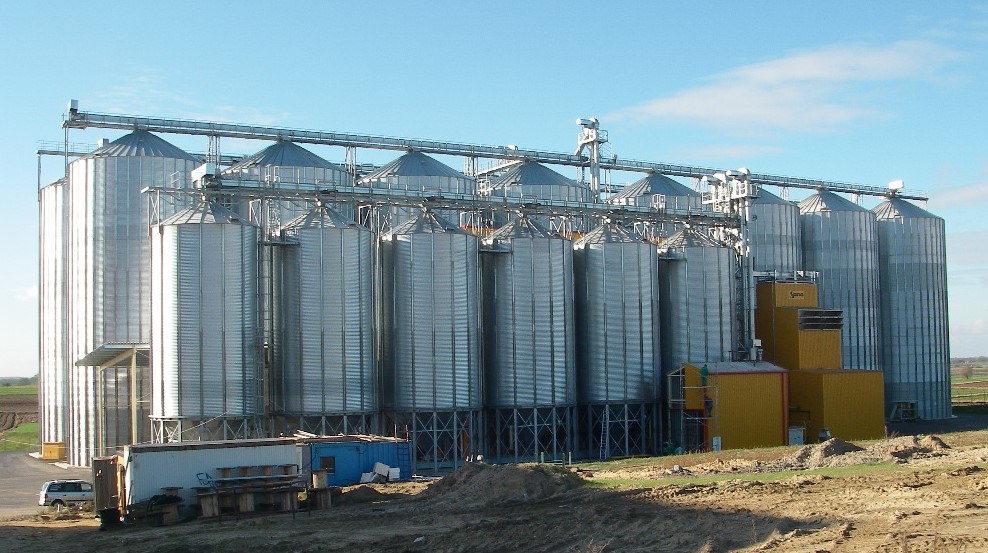

Silo Systems by Product and Space
Whether a single cell or a complete cell block with intake, cleaning and drying: we design storage so the product comes out in the same condition it went in.

Cells from
50 m³
capacity
Single cells up to
3,000 m³
volume
Intake capacity up to
120
tonnes
per hour
Silo Systems
Turnkey Drying and Silo Systems
From the intake pit through cleaning and drying to discharge – steel construction, machinery and controls from a single source.

A silo isn’t a container,
it’s a process.
Grain rarely arrives clean and dry. Before it goes into the cell, it has to be received, weighed, cleaned of impurities and, in many cases, dried. Skip one of these steps and it only shows up months later – as reheating, mold or a clogged outlet.
That’s why we plan the entire chain, not just the cell: intake, cleaning, drying, storage and discharge are designed together and run from a single control system.
Our Working Process With You
Five steps from the first inquiry to ongoing operation – with the same contacts throughout.
-
 Consulting & Planning We clarify what the plant needs to achieve: product, throughput, space and budget. This becomes a concept before we even talk about machines.
 -
 Engineering & Production Our design team develops the plant in detail, and our own production builds the matching components – both in-house in Lastrup.
 -
 Project Management One point of contact coordinates schedules, deliveries and trades, and speaks up before a deadline slips – not after.
 -
 Installation & Commissioning Our own fitters install the plant and start it up until throughput and accuracy reach the agreed values.
 -
 Ongoing Support After handover, the same contact person remains responsible – for spare parts, maintenance and future expansions.


Turnkey Drying and Silo Systems
Our Drying and Silo Systems in Every Design

Round Silos
Structurally efficient and the most economical solution for large volumes – as a single cell or in a group.

Rectangular Silos
Make optimal use of limited floor space and can be combined into cell blocks for many components.

Flat Storage
The right choice for very large volumes and infrequent turnover – with aeration and reclaiming technology.

Intake & Weighing
Intake pit, conveying technology and weighing: the point where quality control begins.

Cleaning & Drying
Impurities out, moisture down – the prerequisite for storage to work at all.

Interested? Get in touch!
Contact us nowAre you planning a new silo system or want to expand existing cells? Tell us the product, quantity and turnover frequency – we'll get back to you.

Pre-Cleaning of Raw Material
Grain and bulk materials rarely arrive clean. Straw, husks, stones or metal parts mix in with the goods and impair flowability, storability and equipment alike. Before storage, the product therefore passes through drum sieves, vibrating screens, centrifugal cleaners and in-line magnets that reliably remove foreign objects and impurities. That way, only what belongs ends up in your silo cell.

Expanding or modernizing
an existing silo system?
The steel structure of a silo system usually outlasts the technology inside it. It’s often worth renewing the conveying technology, cleaning or controls instead of building new – or connecting an additional cell.
We’ll take a look at your plant on site and tell you honestly what’s worth doing and what isn’t.
Individual Machines for Drying and Silo Systems
Intake, cleaning, drying, storage – this is the path the product takes through the plant.


Knowledge
Frequently Asked Questions About Drying and Silo Systems
-
With ample space and large volumes, the round silo is usually more cost-effective. Where space is tight or many components need to be stored separately, the rectangular silo shows its strength as a cell block.
-
Impurities, dust and foreign objects accelerate spoilage and clog outlets. Cleaning before the cell is far simpler than remediating a spoiled batch.
-
That depends on the product and the planned storage duration. For longer storage, there’s no way around drying – we design it to match your intake capacity.
-
Generally yes, if it was considered in the initial planning. Conveying technology and foundations can be designed so a later cell can be connected without conversion work.
-
We supply the structural engineering for our silos. For foundations, we work together with your construction company and provide the necessary load specifications.